Speech and Natural Language Processing — Lecture Notes and Course Materials
This page provides open educational resources for the study of Speech and Natural Language Processing, including lecture notes, course material, examples, and supporting learning resources. The material covers both speech processing and computational approaches to understanding and processing natural language.
The resources are intended for undergraduate and postgraduate students, teachers, researchers, and independent learners of Computer Science and related disciplines.
What You Will Find
- Lectures' slides on speech processing and speech recognition
- Fundamentals of phonetics and computational phonology
- Natural Language Processing concepts and linguistic analysis
- Morphological analysis and finite-state approaches
- Tokenization and Parts-of-Speech tagging
- Syntax analysis and parsing
- Statistical methods and language processing
- Statistical machine translation
- Applications of NLP to Indian languages
Course Information
Prerequisites
- Computer Fundamentals and C
- Data Structures and Algorithms
- Discrete Mathematical Structures
Course Description
Speech and Natural Language Processing deals with computational methods for understanding, representing, and processing human language. The course introduces speech production, phonetics, speech recognition, linguistic analysis, morphological processing, parsing, statistical methods, language modelling, and machine translation.
The course also examines the relationship between formal language concepts and natural language processing, including the use of finite automata, grammars, and statistical techniques in language analysis. Applications to Indian languages are also considered.
Course Objectives
- Understand the fundamental principles of speech processing.
- Study the human speech production mechanism and phonetic analysis.
- Understand computational approaches for natural language processing.
- Study morphology, syntax analysis, and parsing techniques.
- Understand statistical approaches to language processing.
- Study machine translation and its applications.
- Understand computational approaches for processing Indian languages.
Learning Outcomes
- Explain the basic concepts and components of speech recognition systems.
- Understand articulatory, acoustic, and auditory phonetics.
- Understand computational phonology and morphological processing.
- Apply NLP techniques including tokenization and Parts-of-Speech tagging.
- Understand finite-state and grammar-based approaches to language processing.
- Analyze natural language using parsing techniques.
- Understand statistical approaches to NLP and machine translation.
- Recognize applications of NLP and speech processing in Indian languages.
Lecture Notes and Course Modules
Module 1: Speech Processing and Speech Recognition
Topics Covered
- Human speech production system
- Components of speech signals
- Articulatory, acoustic, and auditory phonetics
- Speech recognition systems
- Speech recognition models
- Hidden Markov Models for speech recognition
- Computational phonology
Learning Resources
Module 2: Natural Language Processing Foundations
Topics Covered
- Introduction to Natural Language Processing
- Linguistic principles and language structure
- Morphological analysis
- Finite automata in NLP
- Tokenization
- Parts-of-Speech tagging
- Statistical tagging approaches
Learning Resources
Module 3: Syntax Analysis, Parsing and Machine Translation
Topics Covered
- Syntax analysis and sentence structure
- Context-free grammar based parsing
- Parsing algorithms for natural languages
- Statistical approaches in NLP
- Statistical machine translation
- Applications of NLP in Indian languages
Learning Resources
About These Lecture Slides
These lecture slides are based on material developed and used while teaching Computer Science courses. They have been organised and made available as an open educational resource for students, teachers, researchers, and independent learners.
The material is intended to complement classroom instruction and standard textbooks. Learners are encouraged to consult additional scholarly references for deeper study of speech processing, computational linguistics, and natural language processing.
Related Computer Science Resources
Speech and Natural Language Processing is closely related to several areas of Computer Science. Related learning resources available on this website include:
Further Reading
For additional study of Natural Language Processing, Speech Processing, and related computational methods, readers may consult the following chapters from my book:
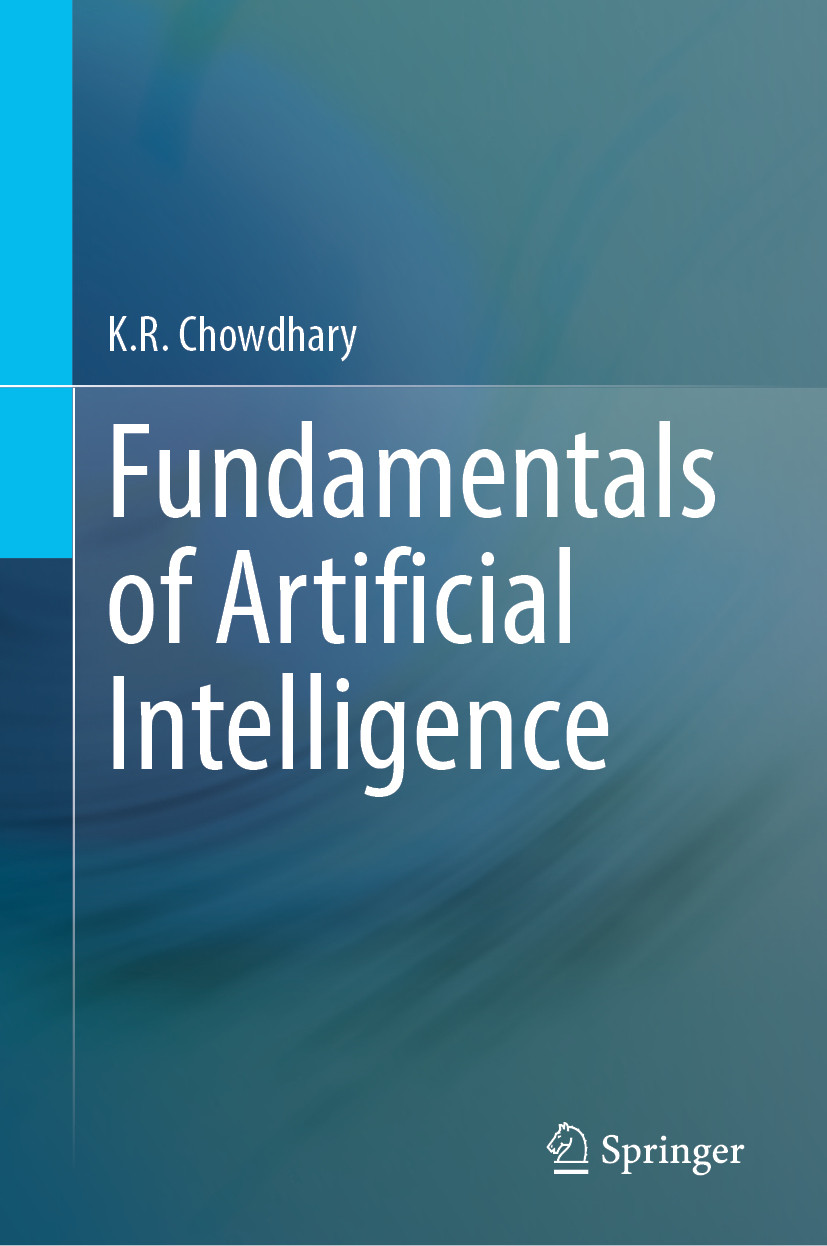
Selected Chapters from the Book
-
Chapter 14: Statistical Learning Theory
Read Abstract of Chapter 14 – Statistical Learning Theory(Springer) -
Chapter 19: Natural Language Processing
Read Abstract of Chapter 19 – Natural Language Processing (Springer) -
Chapter 20: Automatic Speech Recognition
Read Abstract of Chapter 20 – Automatic Speech Recognition (Springer)